
Breath as a Tool: and Why it Matters
Breathing is THE most fundamental process of life. From the moment we are born to our very last second, it is one function in the body that never stops.
Every cell undergoes cellular respiration, where oxygen helps convert nutrients into usable energy. Every cell in our bodies depends on oxygen to produce energy.
Inside the cell, a process known as cellular respiration occurs. This is where oxygen aids the conversion of nutrients into usable energy known as ATP (Adenosine triphosphate). Exhalation also helps remove carbon dioxide, a natural waste product of ATP.
This exchange is vital to life.
Breathing is much more than inhalation and exhalation; it is a regulatory system that constantly communicates with your brain to adjust how you feel, think and respond to the world around you.
BREATH BRIDGES THE BODY AND MIND
Within the human body, most systems run automatically; your heart, digestive system and hormones are all switched on to ‘auto pilot’ without giving any thought.
This is how the breath is different and so unique – it is both automatic and can be controlled, making it a powerful tool between your conscious mind and unconscious body
When your body undergoes stress, breathing patterns change automatically. It becomes faster, shallower and occurs higher in the chest, signalling to stay in a heightened state of alertness.
The magical thing about the breath is that we can control this automatic response and intentionally change it to slow down the heart rate, reduce tension and shift body and mind state.
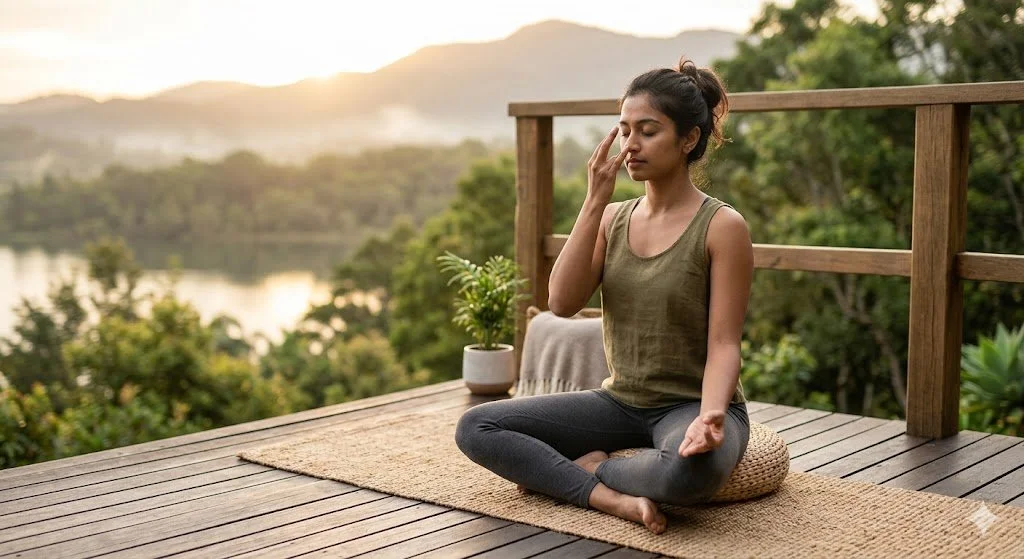
ANCIENT ROOTS – PRANAYAMA
When breathing is controlled, it can reduce the heart rate, improve heart rate variability and activate the parasympathetic nervous system. Research on Pranayama (yogic breathing) also suggests improvement inLong before modern science, ancient yogic traditions had already identified the breath as a powerful tool for influencing both the body and the mind. The benefits of breath were not through data collection, yet the feeling of a balanced state of being mentally, and in return, physically.
The practice of Pranayama can be understood as the expansion and regulation of life force through the power of breath. The two Sanskrit roots of Pranayama are
1) Prana, meaning life force or energy
2) Ayama, meaning expansion, extension or control
In ancient texts, the human system is viewed as interconnected, with breath, body, and mind continuously influencing one another. In the Yoga Sutras of Patanjali, Pranayama is one of the fourth limbs of yoga and must come before deeply working with the mind. It is a way to steady the mind, reduce mental fluctuations and prepare oneself for deeper meditation and concentration.
In Hatha Yoga Pradipika, Pranayama is described in more detail in breath control techniques and states that when the breath is unsteady, the mind is unsteady. When the breath is still, the mind is still. Although an ancient observation, this aligns with modern research and findings that breathing patterns can directly influence emotional and cognitive states.
If we look back at ancient practices and bring them forward into modern times, these systems have not only been practised for thousands of years but are now methods justified by modern research and science. What ancient traditions once described as ‘balancing energy’, science now understands as ‘regulating the nervous system’.
Pranayama has a direct way to counter environmental influences such as overstimulation, chronic stress and other pressures, and it can be done anywhere, without equipment and with an almost immediate effect.
WHY THESE PRACTICES STILL MATTER TODAY
Human physiology has not evolved at the same pace as the modern environment.
Our world today can be characterised by constant stimulation, chronic, low-grade stress and limited opportunities for true recovery.
The human nervous system was designed for intermittent stress, with short bursts of activation, followed by rest. Yet many people today live in a persistent state of sympathetic activation (“fight or flight”).
Chronic stress disrupts vagal regulation, which reduces the body’s ability to return to a calm and regular state. Without intentional intervention, the body can struggle to activate the parasympathetic nervous system (“rest and digest’) response. This is where Pranayama becomes relevant, not as a tradition, but as a proactive tool that requires no equipment, can be practiced anywhere and produces effects within minutes.
Pranayama uses breath to shift physiology first and then allows the mind to follow. The ancient practices do not necessarily have to be replicated but can be used as a foundation to access principles of repeatable tools.
Various applications can be
- slow breathing (4-6 breathing)
- nasal breathing, to improve efficiency and regulation
- short, structured practices that can be integrated into daily life.
BREATH AND THE NERVOUS SYSTEM
The body operates through the autonomic nervous system, which is influenced by breath directly, has two key branches:
1. Sympathetic Nervous System
2. Parasympathetic Nervous System
When you breathe faster, the heart rate increases, you have a higher stress response and muscle tension is greatly increased.
However, when you breathe more slowly, the heart rate is slowed down, inducing greater relaxation and improved recovery. Slower breathing has proven to improve heart rate variability and is a key marker of resilience and health. It tells your body that you are safe.
In industries where stress is constant, such as the food and beverage industry or in healthcare, most people create a chronic stress loop by pushing harder, ignoring the fatigue or running on adrenaline. Breathing can be a direct and instant tool to manage our physical and mental state.
It is the most underused tool we carry with us and a direct access to immediate regulation. If it is focused on and continuously used, it becomes a stabiliser of stress, recovery tool, performance enhancer and a foundation for long term health.